Program Evaluation
For new programs, Creating a Family follows a 6-step process that includes: listen, create, pilot, evaluate, improve, and distribute. Evaluation is an integral part of our program development. Listed below are findings and study reports on some of our most recent program evaluations related to prenatal substance exposure.
Prenatal Substance Exposure Training/Workshop Study Brief
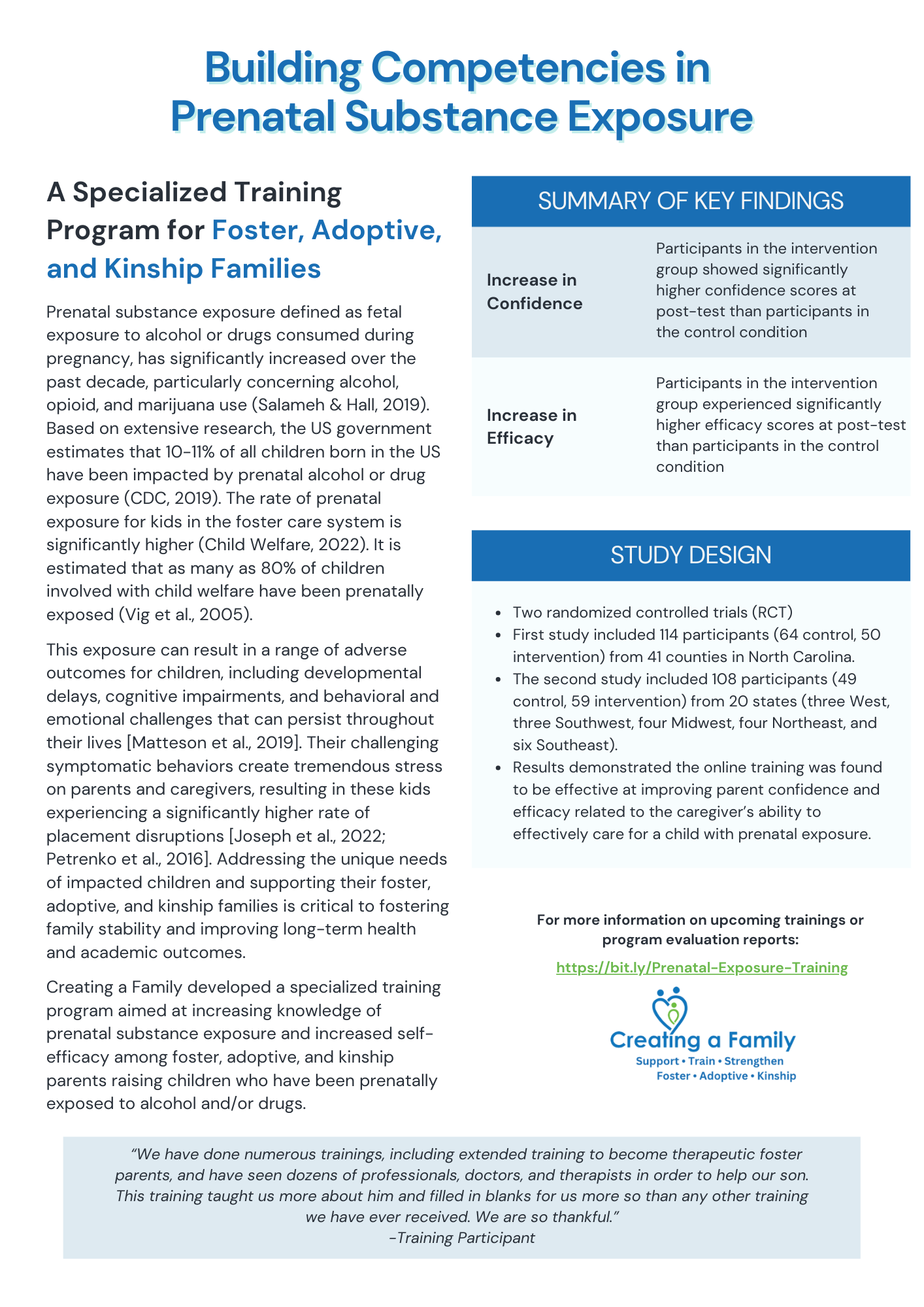
The following report outlines the key findings of 3 randomized control trials Creating a Family conducted to evaluate our facilitated interactive trainings/workshops on prenatal substance exposure to alcohol and drugs. Creating a Family offers a specialized training program for child welfare staff as well as foster, adoptive, and kinship families.
Click here for more information on upcoming Prenatal Substance Exposure Trainings/Workshops
Building Competencies in Prenatal Substance Exposure
This evaluation assessed the effectiveness of a specialized training program aimed at
increasing child welfare professionals’ (CWP) knowledge of prenatal substance exposure (PSE) and enhancing their confidence in supporting affected children and resource families (e.g., foster, kinship and adoptive). The training reached 406 participants across 10 North Carolina counties and the Eastern Band of Cherokee Indians (EBCI). Results demonstrated substantial knowledge gains and modest improvements in confidence, with no significant differences between training mode (in-person vs virtual). Individual variability in outcomes underscored the program’s flexibility in meeting diverse professional needs across counties.
Summary of Key Findings:
Click here for more information on the Prenatal Substance Exposure Training for Child Welfare Staff
Prenatal Substance Exposure Training for Foster, Adoptive, & Kinship Parents
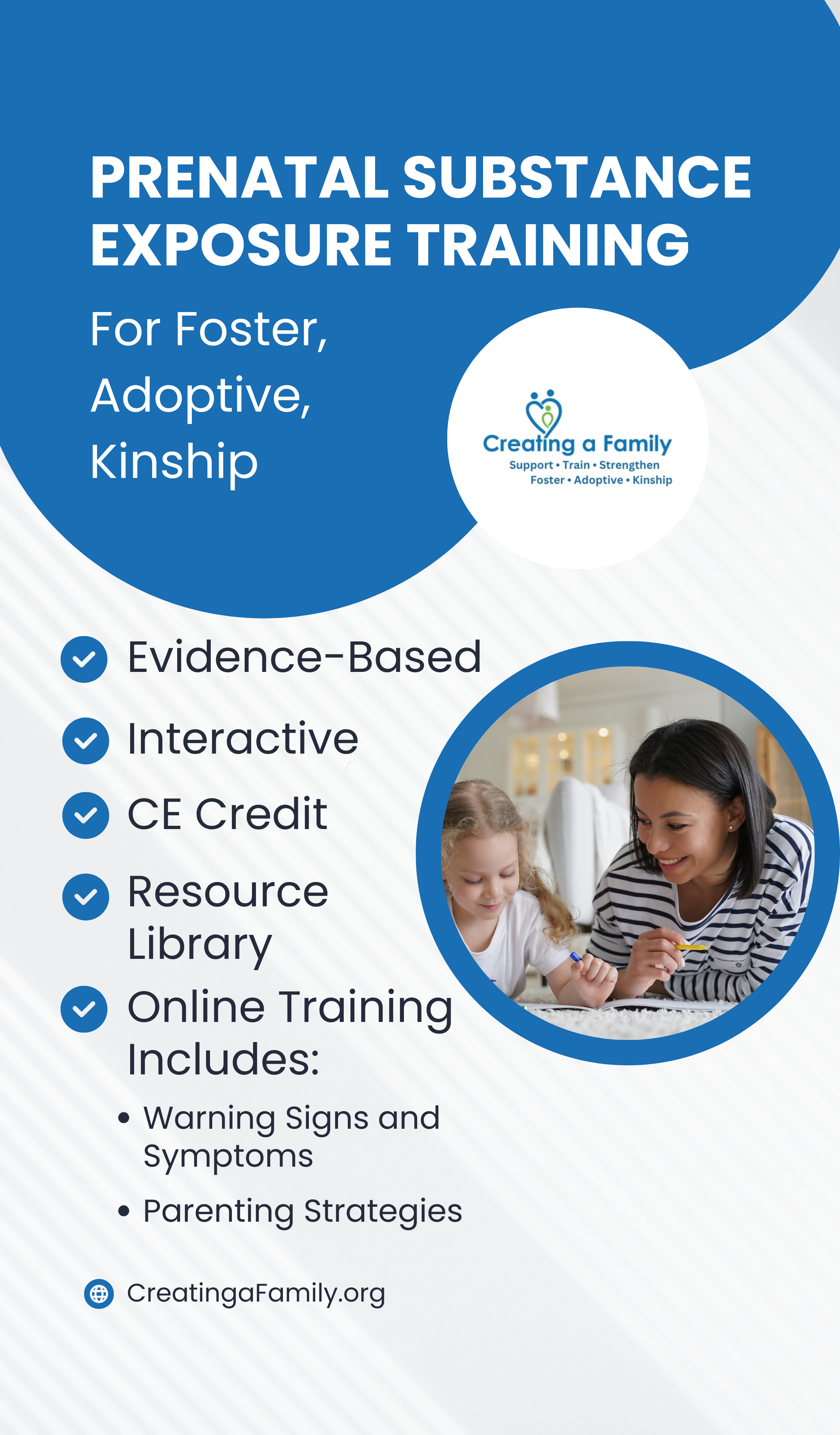
Creating a Family worked with a professor at NC State University to run two randomized control trials to assess the effectiveness of a training program aimed at increasing knowledge of prenatal substance exposure and increased self efficacy among foster, adoptive, and kinship parents raising children who have been prenatally exposed to alcohol and/or drugs. The online training was found to be effective at improving parent confidence and efficacy related to the caregivers ability to effectively care for a child with prenatal exposure.
Summary of Key Findings:
2022 Randomize Control Trial (Initial Results)
2023 Randomize Control Trial (Initial Results)
Click here for more information on the Prenatal Substance Exposure Training for Parents