If You Only Have a Minute:
Raising a child with disabilities may be harder and more complex than you expected. Let go of rigid milestones, find people who understand, advocate for your child, and make space for your own needs. Adjusting expectations can help you find a more sustainable path forward.
Michelle Seitzer is a writer, caregiving expert, and adoptive parent to a daughter with complex needs. Her personal and professional caregiving experiences have given her firsthand insight into what it means to adjust expectations when a child’s disabilities and support needs are greater or more complex than anticipated. Michelle writes with compassion and candor about caregiving, acceptance, and finding a sustainable way forward when family life looks different than you expected.
***********************************
I’ve done a lot of hard things in my life. Completing cancer treatment during COVID, writing a book while raising a preteen, starting a business, adopting a toddler from another country…
Hard as those things were, parenting a differently abled child has been the hardest – harder than all the hoops we jumped through to bring that sweet toddler from Bulgaria to Pennsylvania.
It still is.
And it all has to do with that “e” word. “Expected.”
When my youngest cousin was a toddler, I remember a few of us were climbing a steep, rocky hill near our house. The older kids and his parents helped him as much as a toddler would allow. But at one point, he grabbed a branch to pull himself up. We all turned at his sharp cry of pain and saw him holding onto a pricker bush. “That was NOT what I expected,” he blurted out between sobs.
Even though his little toddler self must have known this was a hard climb, he wanted to do it himself. He problem-solved quickly and reached for that branch, not expecting it to make the climb painful too.
What to Do When Reality Hits Home
Most of us expect adoption, foster care, or parenting to be hard. As a first-time parent at age 35, I went into our special needs international adoption of a toddler with that mindset:
“This will be so hard, but I’m up for the challenge.”
“This will be really hard, but it’s what I really want to do.”
From 2011 to 2013, as we completed interviews, paperwork, travel, training, and all the other things required of prospective adoptive parents, these were the things running through my brain.
But our greatest expectations are no match for the reality of every day, every minute, and every second being harder than hard. Our well-adjusted mindsets and tempered thoughts fly out the window when we’re caught off-guard by the unexpected pains and challenges even our wildest imaginations couldn’t dream up.
Yes, there are lots of unexpected joys, privileges, and gifts too. It’s not a perfect science — there’s no balancing out there. It’s best to swap that expectation for the mixed bag that it is.
Download a FREE guide to Understanding Prenatal Exposure to Alcohol and Drugs
5 Vital Mindset Shifts When Raising a Differently-Abled Child
Adjusting our mindset doesn’t make hard things disappear or erase disappointments. However, it can stop the inner fighting and give you hope in the face of hardship. This is what I’ve come to realize after 13 years of raising a child with complex needs and different abilities (and still going strong). It will be harder than expected, and you can do hard things.
Here are 5 mindset shifts to help you adjust your sails:
Mindset Shift #1:
Milestones and markers don’t really apply here, so enjoy whatever wins matter most to you.
Can we please throw away those developmental milestones books?! I know it’s nice to have guidelines, but we pin too many hopes on those pages of text and growth curves. Almost every parent wants to know the how, where, when, and why of what their kids will and won’t do. But we also know each child is different and will follow their own timeline.
When we were preparing for adoption and parenting, people were constantly recommending books. I always said, “Unless there’s a book specifically about my daughter, I don’t want to read it.” (Disclaimer: I did read a lot of helpful books, but you get the picture.)
When raising a child with disabilities, milestones and markers will be all over the map. Some will be significantly delayed or potentially absent.
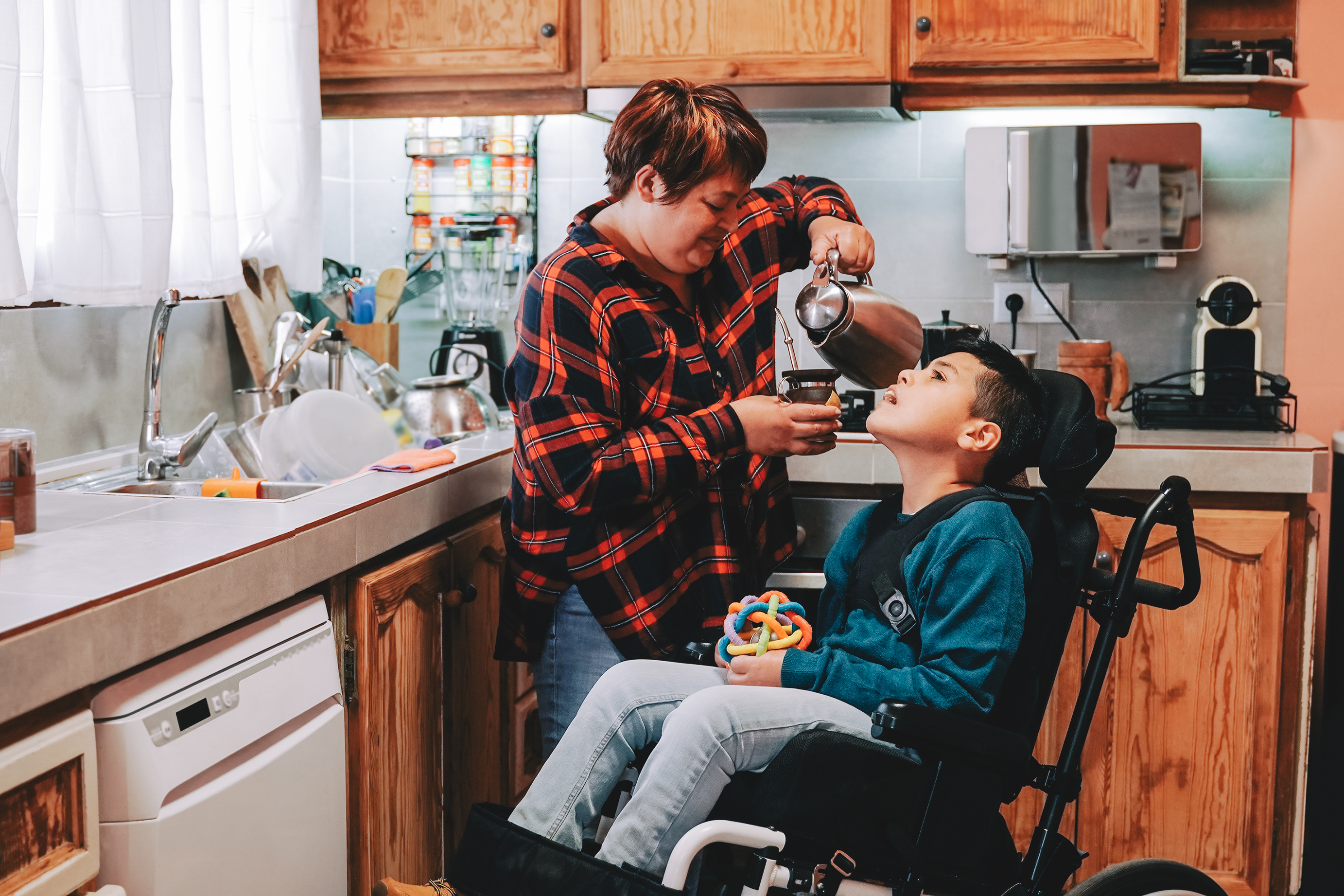
The first physical therapist we had for our daughter (the first of many, starting at age 2) gave me some tender advice that I’ve held on to all these years.
“Just enjoy her,” she said. “No matter what she does or doesn’t do, just enjoy her.”
Prepare to be surprised. And keep an open mind and heart about things like walking, talking, dating, driving, having a job, or having a family. Time will tell, and rushing won’t make things happen.
Goodbye, marking a chart!
Shift your mindset to “I will look forward to any and all progress my child makes whenever it happens.”
Mindset Shift #2:
The paperwork and meetings won’t end. So keep the goals in mind and make it as fun and convenient as possible.
Medicaid applications, IEP meetings, insurance appeals, therapy assessments — the list goes on. Adult life is often full of paperwork and meetings as it is, but parenting a child with disabilities takes it to a whole other level.
Forget about filing systems and keeping things organized — or even filling things out as thoughtfully and neatly as I used to. I had to learn how to let things slide in favor of getting things filled out on time (because insurance coverage often depends on it!).
Create little rituals around filling out forms to make the drudgery more enjoyable. Use paper plates on the nights you have back-to-back phone calls with your insurance. Or reward yourself with a favorite snack. Celebrate having your last meeting of the month (or week) with dinner at your favorite place.
Goodbye, easy forms and downtime!
Shift your mindset to “How will these forms or conversations translate to more support for my differently abled child?”
Mindset Shift #3:
The people you meet who “get it” are GOLD, so make friends in this category if you haven’t already.
Find your tribe. Talk to other parents of children with disabilities. All ages count. Get to know the special ed teachers, the parents in the therapy waiting rooms, and the staff you meet who care for children with different needs. These are your people!
You’ll need them a lot, because as loving and caring as friends and family may be, they cannot fully understand what your everyday life is like. And there will be a lot of hard days when you need to talk to — or hear from, cry with, or vent to — someone who does.
Goodbye, isolation and invalidation!
Shift your mindset to “I need people around me who I don’t have to explain everything to.”
Mindset Shift #4:
The looks you get don’t matter – unless, of course, those looks are warm smiles and unspoken understanding.
I was a pretty shy kid, always preferring the book report over the oral presentation. My sisters and I mumbled our orders at restaurants, barely looking up from the menu.
That all goes out the window when raising a child with disabilities. People will stare at you. Sometimes, they stare because they’re unsure of how to help you and your child in visibly difficult moments (like when I had to take out and fold up a wheelchair and a walker for PT visits and post-op appointments).
Sometimes, they stare because of the things your child does — in my case, things like rocking, stimming, verbal outbursts and noises, aggression, and intrusive questions. Other times, they stare at physical differences, like the brace my daughter wears on her left leg or how she walks differently from all her hip surgeries.
There is no room for being shy and quiet when advocating for your differently abled child. Yes, you can be polite and firm, but you cannot expect a whispered request to reach a doctor or principal’s ears. Sometimes — too often, really — we have to turn the volume WAY UP for even the most basic things.
And no matter how much of a homebody you or your child may be, get ready for a lot of “out and about” time for therapies, doctor appointments, IEP meetings, brace fittings and more, beyond just the regular life stuff of dining out, school programs, and family gatherings.
For practical training in becoming a more spicy parent, I highly recommend the show Speechless, which aired on ABC in September 2016. Minnie Driver plays the mama, and she nails the role with equal parts tenderness and tenacity. The series beautifully portrays the often hidden, unique-to-each-family dynamics, roles, and sacrifices that come with this kind of parenting.
Goodbye, “I don’t want to draw attention!”
Shift your mindset to “How can I teach people about compassion, diversity, and sensitivity through the way I care for my child?”

Mindset Shift #5:
Burnout is real and far-reaching, so don’t dismiss respite or put off your own care needs.
You will learn a lot about yourself in this kind of parenting. After 13 years in this role (and many surgeries including a broken femur, regrown adenoids, 6 sets of ear tubes, and holes in the retina), I would gladly do days of the physical care tasks, even driving for hours and parking in garages and wearing the same clothes, over days of the daily grind of emotional and behavioral stuff. Especially when support, answers, and hope on that front seem to dwindle instead of spark.
But in parenting of any kind, you don’t get to choose much. Most days, you’re doing the physical, emotional, and mental heavy lifting all at once. You’re a caregiver and also a comforter, a chauffeur and a companion, a chef and a cop and everything in between.
You’re never really off the clock. Expect every day to bring a new challenge or ten. Face each one with grace for yourself and a reminder that you are, after all, still human.
You will get tired. You can’t always find the silver lining. But if you keep pouring out without refilling, you’ll fall apart. And it’s even harder to do paperwork, meetings, advocacy, and all the other stuff (even the good stuff!) when you haven’t given yourself what you need.
Goodbye, “I don’t have time for me!”
Shift your mindset to “How can I do more things for me so I can keep caring for my child?”
***********************************
Making Room for the Child as They Are
Parenting a child with complex needs often asks us to continually adjust what we thought our family life would look like. We’re grateful to Michelle for sharing her experience so openly and for reminding other parents and caregivers that changing our expectations doesn’t mean giving up. Instead, it can help us make room to see and celebrate our child as they are, while also caring for ourselves along the way.
Image Credits: vanenunes-https://app.envato.com/photos/28426de8-30b1-40c3-906c-fa7168b67214; LightFieldStudios-https://app.envato.com/photos/284db193-c171-4b3f-b9db-53583649b7ed; Katerina Holmes-https://www.pexels.com/photo/black-teacher-standing-near-desk-and-pointing-at-pupils-copybook-5905478/
Add Your Comment