
Are you ready to meet a child you plan to adopt or foster? Do you feel some level of anticipation, anxiety, or fear? It’s completely normal to have mixed feelings rolling around in your gut. The child you are meeting likely has all these same emotions – but more significant and more confusing! In the first moments of meeting this child, you can help calm your child’s fears by preparing yourself with a plan. The added benefit is that preparing yourself to meet their needs enables you to get a handle on your own worries.
8 Tips to Calm A Child’s Fears
Those early minutes of a first meeting when adopting or accepting a foster placement can be fraught for you and your child. These practical, easy-to-implement tips from the late Dr. Karyn Purvis will help you put this child at ease, calm those fears, and welcome this precious child to your home.
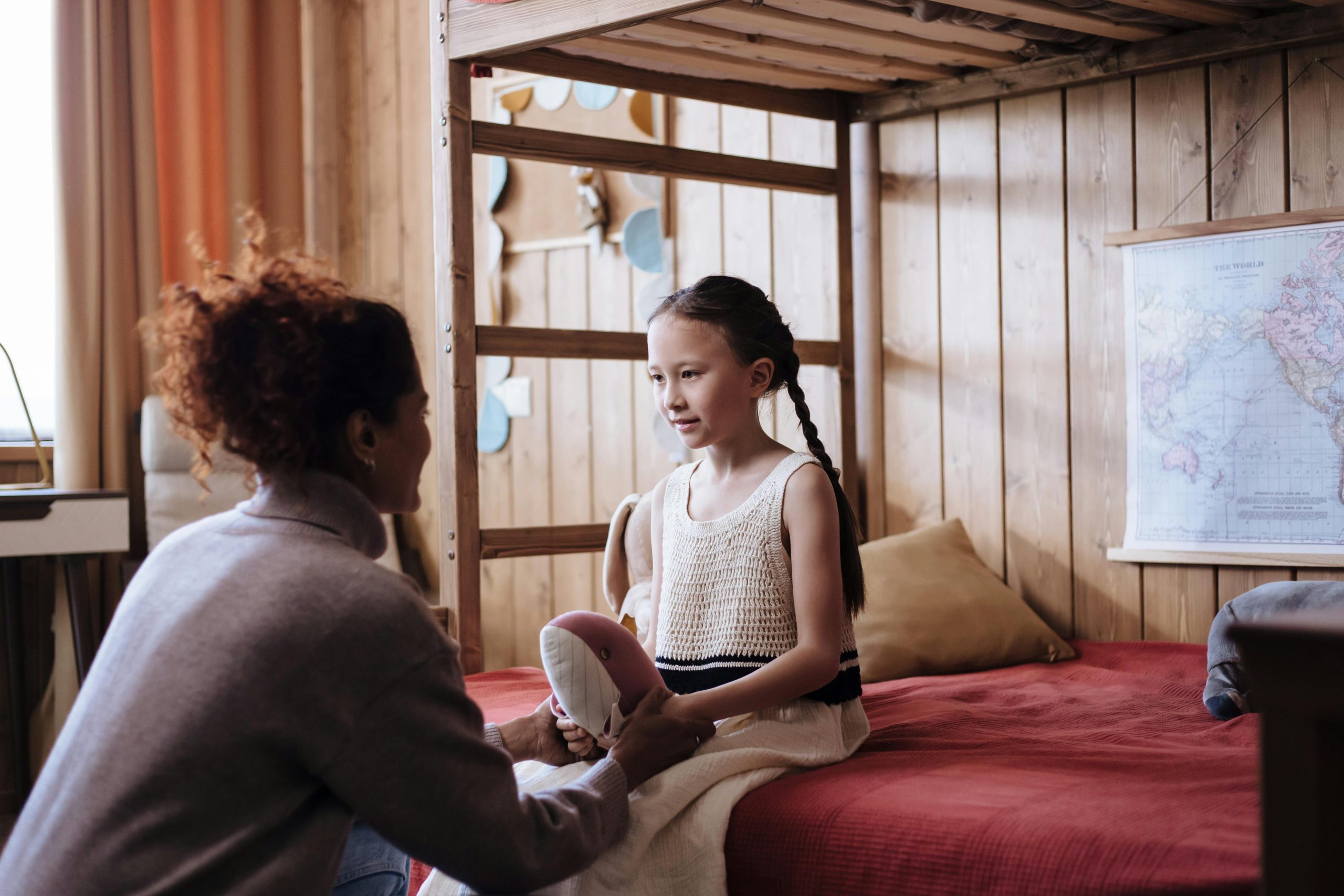
1. Get down on the child’s level.
Physically lower yourself to the child’s height or eye level when talking to them. Speak gently and age-appropriately to capture their attention and show that you are not a threat.
2. Make eye contact.
Gently and respectfully look this child in the eye. If they look away or pull back, that is a cue they are uncomfortable with the intensity or intimacy of the moment. That’s okay. Look away when they do, then gently reestablish eye contact. Eye contact may be sporadic for a while, and that’s also okay. Consider the child’s cultural context around the issue of eye contact, too. If you have questions, ask the caseworker or do some research before the meeting.
3. Speak their language.
When you prepare to welcome a child who speaks a different language than you do, hopefully, you will know about it before this meeting! Prepare by learning a few phrases in their language to say simple things that communicate safety and welcome. Some examples might be, “Hello,” or “I’m so glad to meet you,” “Do you need to use the bathroom?” and “Are you hungry?”
In case you don’t have time to prepare by learning a few key phrases, have a translating app easily accessible. You can increase the welcome factor by being silly via the app, which is also an excellent tool for easing their fears.
4. Maximize the sense of smell.
There’s nothing quite as soothing and welcoming as the smell of homemade bread or cookies, is there? When a frightened child comes to your home for the first time, scents like those can calm their other senses, settle their bodies, and make them feel safe. Dr. Purvis recommended keeping a stash of frozen cookie dough so you can bake a small batch as the child arrives.
5. Give a house tour.
You should try to show this child around your house as soon as possible. However, please keep it simple, with minimal words and certainly not many questions that make them feel “on the spot.” Let them take it in slowly and gently.
Parenting a Child Exposed to Trauma
6. Offer choices.
So much of what this child has already experienced is out of their control. You can help recalibrate that by offering them a voice as soon as you meet. Giving simple choices, like “Do you want milk or water with your cookies?” or “Would you like to hold my hand while we see the upstairs of the house?” can help this child feel a sense of control and ownership over their own experience.
7. Give them tools to communicate.
When you and this child speak different languages, use that translator app as often as necessary. Ask your caseworker or agency representative for a translator. If you travel overseas for adoption, you can order books and flashcards to help your child express their needs or wants.

If this child’s fear is so gripping that they cannot or will not speak in the early hours of your meeting, offer picture books, flashcards, or the option to point to what they want or need. You can worry about easing them out of those later. Right now, focus on setting them at ease and making them feel safe.
8. Food is love. And comfort.
As soon as possible, offer this child something to eat and drink. Food almost universally communicates care and nurture and can go a long way toward calming a terrified child, especially if it’s a familiar treat.
It’s also crucial to offer something to drink – research has shown over the years that children from hard places are often dehydrated.
Their Brains are on Fire!
You must remember this child’s fear is a response to the upheaval, chaos, and loss they’ve endured. The trauma they have experienced has taught them to be wary, hypervigilant, and guarded. Their brains are on fire with fear, and your job is to calm this child’s fears as much as possible, as early as you can when you meet.
We are grateful for the many opportunities we had to learn from the late Dr. Karyn Purvis. If you haven’t read her books, The Connected Child* and The Connected Parent*, we cannot recommend them enough for the practical understanding of trauma, how it impacts children’s brains and bodies, and how to support them from the first meeting and beyond.
More resources for Transitioning a Child to Your Home
Image Credits: Mikhail Nilov; Meruyert Gonullu; Ron Lach; Suzy Hazelwood
*As an Amazon Associate, we earn from qualifying purchases but only recommend books we value. Thanks for your support.
Add Your Comment