

This article is brought to you through the generous support of our partner, the Jockey Being Family Foundation®. They share our vision of providing education and support to strengthen families.
{This article is the second of a two-part series about potty-training kids impacted by trauma, prenatal substance exposure, neurodiversity, or learning challenges. Part 1 is here.}
Adopted, foster, and relative children may struggle with nighttime bedwetting and related toileting issues – even if they were successfully potty trained before joining your home.
Understanding the Why of Bedwetting for Your Child
Whether this child is brand new to your home or you’ve been raising them for a while now, it’s common for all kids to experience daytime accidents or struggle to stay dry overnight. In fact, according to Nationwide Children’s Hospital, about 15% of all 5-year-old children still wet the bed.
Nighttime wetting, also called nocturnal enuresis, is not a behavioral issue. Instead, it’s a developmental and maturity issue.
In a typically developing child, bedwetting can occur for a variety of reasons, including:
- Challenges with waking from sleep, particularly for deep sleepers
- Slower development of their central nervous system, which may result in the bladder emptying at night
- Some kids have kidneys that produce more urine when they are asleep
- Genetic factors, including relatives who had nighttime accidents in childhood
Additional Toileting Issues to Consider
When a child is new to your home

When a child is adjusting to a new home, they are busy processing the losses and changes they’ve just experienced. They also likely have many new or challenging emotions about it all. For new kids, bedwetting (as well as daytime accidents, holding stool, etc.) can be typical and common. After all, their brains and bodies are focused on more significant issues like assessing their physical environment, determining whether these adults are trustworthy and safe, and processing those big feelings.
During this transition, sleep patterns may also be erratic. This child may not allow themselves to fall into a deep sleep often enough to be rested. They may wake frequently or get by on less sleep than a child their age truly needs. These cycles can compound the issues they are facing, and their body struggles to do the work it did before coming to your home.
Nighttime dryness and other potty-training skills will often regress. At the same time, their body and brains adjust to all the other changes — even if they were successfully toilet-trained before coming to live with you.
When a child is from another country or time zone
When you’ve adopted internationally, or this child is a foster placement from across the country, it’s crucial also to add jet lag into the mix! It may take up to one week per hour of time difference for a child’s brain and body to fully adjust. Day and nighttime accidents should be included in that “formula” if you welcome a child that is reportedly potty trained.
Children from other nations also likely have significantly different experiences with toilets, flushing, feeling safe to leave their bed at night, etc. Be sensitive to cultural and experiential differences around the issues related to toileting in general while you are learning this child’s needs and temperament.
When a child has other challenges
In addition to the information from our first article in this series, consider how kids with neurodiversity, physical disabilities, learning challenges, etc., may also struggle to gain and maintain the skills needed to be successful with potty training.
Their process to learn may be slower. You may need additional resources, practical tools, and support to help them succeed. Remember, about 15% of typical 5-year-olds still wet the bed. Consider your child’s developmental age rather than their chronological age and support yourself and them with age and stage-appropriate tools that fit their needs. Our Executive Director, Dawn Davenport, often said, “Learn how to parent the child in front of you.” That sage advice will help you focus on your child’s needs so they can taste success in overcoming bedwetting.
Understanding the Different Types of Bedwetting
At the risk of oversimplifying, there are three main types of bedwetting to consider:
1. Situational bedwetting:
It occurs when a child is sick, emotionally spent, overstimulated, or overtired.
2. Developmental bedwetting:
This is when a child’s body is not ready to manage all the internal tasks that keep them dry overnight. Sometimes, they need extra time and patience from everyone to allow their bodies time to coordinate those skills. Remember, research shows that nocturnal enuresis can be caused by genetic factors, deep sleep, difficulty waking, and a smallish bladder or kidneys.
We know that trauma can impact development in children. Experiencing any major trauma at the same stage of development when a child is learning how to control their bladder and bowels can interfere with and complicate the process of toilet training. Additional trauma (such as the significant change of adoption, entering care, changing foster placements, or going to live with a relative) can cause delays, regressions, and related challenges.
3. Psychological bedwetting:
It occurs when a child is wetting the bed (or even their clothing during the day) to exert control of their environment or their grown-ups. This type of day or nighttime wetting is rare and not at all the same as considering factors like trauma, prenatal substance exposure, or neurodiversity. The key is for parents and caregivers to avoid turning situational and developmental bedwetting into psychological bedwetting.
The Good News
It will cheer you to learn that adopted, foster, and relative children most commonly fall into the situational bedwetting camp. They don’t want to wet the bed – or have daytime accidents. Depending on how the adults around them handled accidents in other environments, they may also want to avoid it more than you can understand. For example, they may have been shamed or punished, sometimes harshly, for wetting the bed.
A child struggling with situational bedwetting will likely stay dry most nights, no matter what you do. However, when children are struggling right now, they need to know that they are doing their best, they have nothing to worry about, and you are there to help them manage it. You can communicate all this by what you do to help and how you help.
How to Handle Bedwetting
It’s exhausting, isn’t it? You are working through a constant cycle of laundry during the day and waking up in the middle of the night to help your child. Everyone in the house, including you!, is trying to adjust to significant changes and big emotions, and interrupted sleep isn’t helping any of you. While we cannot promise an uninterrupted night’s sleep, we have some helpful recommendations for bedwetting with adopted, foster, or kinship children.
Set a Goal.
Focus your efforts on how to get everyone back to sleep as quickly and peacefully as possible. Do your best to manage an accident with as little fuss as possible. The secondary goal is for your child to learn how to get themselves back to sleep without involving you. (This applies mainly to kids who wet the bed because of developmental delays. A child with situational bedwetting likely won’t keep wetting the bed long enough to learn this skill.)
Change a few key habits.
Limit large amounts of fluids an hour or so before bedtime. Make sure this child uses the toilet right before they go to bed. If you stay up for a couple of hours after their bedtime, it won’t hurt to take them to the potty again on your way to bed.

Simplify their bedding.
Layer their mattress with a good quality waterproof mattress cover. Use only the amount of bedding you need to keep the child warm. You don’t want to exceed the size of one washer load. Many families layer a series of fitted sheets with waterproof pads to strip one sheet and one pad without having to remake the whole bed. Others skip a fitted sheet and use a flat sheet on top of a waterproof mattress cover or pad.
If your child sleeps with a stuffie friend or treasured blanket, consider investing in duplicates so one is always clean and dry.
Minimize the fuss.
Do your best to avoid baths or showers in the middle of the night. If that feels gross to you or your child, keep a bin of baby wipes handy and use them to freshen up quickly and with minimal conversation. Again, the goal is to get back to sleep soon.
If the child’s bed is too wet to sleep, even with the layered protection, consider a “nest” on the floor next to their bed (or yours if it comforts them). Most kids only wet once during the night, but if you have one that is the exception, keep bedding for the nest simple and easily washable. Try one of these suggestions:
- Keep a pallet of blankets and sheets (with protective waterproof pads) rolled up under their bed or in the closet for quick access.
- Stash a child-sized sleeping bag under the bed.
- Keep a stack of absorbent towels under their bed or in the closet for the child to layer on the bed. The bottom towel would absorb the urine, and the top would keep them dry.
- If another bed (trundle bed, extra twin in their room, etc.) is nearby, keep it ready and protected with a plastic mattress cover.
Designate space for the soiled linens.
Keep dry pjs nearby so the child knows where they are and can easily change into them. Designate a place to drop their wet sheets and pajamas safely. Some families use the tub. Others are okay with dropping them on the tiled bathroom floor. Still, others leave a large garbage bag to put the PJs and sheets in. However, that requires some dexterity and skill. If the child isn’t fully awake, it might create more fuss and stress. Teach them not to drop urine-soaked bedding or clothes on carpeted floors.
Parenting a Child Exposed to Trauma
Involve the child in the clean-up.
Kids who struggle developmentally with nighttime accidents will benefit greatly by participating in clean-up. The key to including your child in clean-up is to avoid shaming, blaming, or punishment. Be calm and concise and show them the steps to a thorough and efficient (but quiet) clean-up. Each time they have an accident, model how to work together to solve the problem. For example, younger kids can help carry the pillowcase and pajamas to the washer the next morning while you take the sheet and blanket. Little ones will love to spray the mild cleaner on the plastic sheet cover and floor where the jammies sit so you can wipe it down.
Whatever task you assign them, they will feel competent and proud to help. Praise them for their capability and self-care and thank them for their help. Help them learn how to remake their bed. Even if they don’t develop nighttime dryness for a while, they can layer their skills for cleaning up and taking care of themselves more independently.
We teach our children to button up their shirts, tie their shoes, and take care of wet sheets, all for the same reason: it builds confidence. And in the case of bedwetting, it also restores dignity. Any toileting accident can make a kid feel inferior and immature. We want to counter that by building their competence.
To Pull-up or not – that is the question!
There is a ton of debate about the value of pull-ups in the nighttime potty training process:
- Pro Pull-Up Camp: Ease of use and clean-up; increased independence for child
- Anti Pull-Up Camp: Too absorbent for a child to feel initial drops of urine and prevent a full-blown accident, especially if the child is in deep sleep or struggles to wake.
The choice is up to you: what works best for you and your child? Remember, when you bring home an older child who has even partially succeeded in potty training, they may not have used pull-ups in the past. Pull-ups may not be particularly useful for situational bedwetting, given that you’d have to know in advance that the child will have an accident that night. Finally, there is some evidence that using them may prolong the nighttime training process.
Reassure your child.
Unless your child has significant cognitive delays and is unaware of what their peers may be doing, it’s common for kids over the age of four or five to worry that something is wrong with them. For kids impacted by trauma, prenatal substance exposure, or neurodiversity, it’s crucial to communicate with your words and your actions that you are not upset. That you’ve got them. They are okay; this is just a normal part of their development.
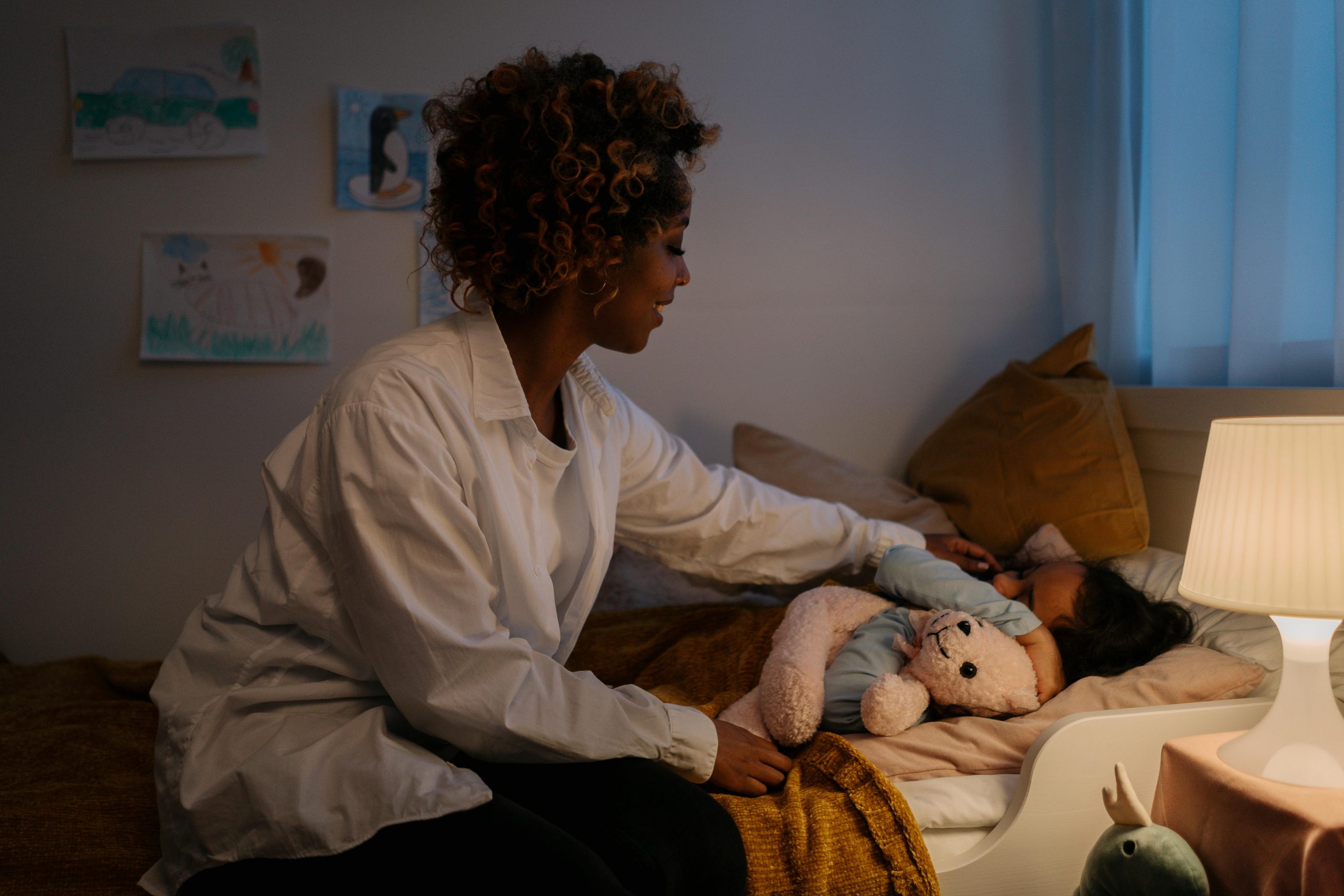
Children need to know that everyone occasionally wets the bed. It helps explain how their body works, so they learn that drinking a big drink right before bed or skipping their nap may make an accident more likely. A child with developmental bedwetting issues must know that plenty of kids their age wet the bed. You could fill two different-sized balloons with water and show them how the larger balloon can hold so much more than the small balloon. Talk about how different bodies grow at different rates inside and out.
Know when to seek help.
Most children outgrow nighttime accidents by 6 to 8 years old. If you are concerned about your child’s toilet training or nighttime accidents, consult with their pediatrician to rule out physiological issues. There are medications and bed alarm systems, but your pediatrician should help you determine the right path forward before jumping to them, starting with a thorough physical exam and frank conversations.
Of course, if there are known physical issues in the child’s files, seek the appropriate specialist for treatment.
Additional Resources You May Find Helpful
We are not medical experts or potty-training pros, but we do have a lot of experience! If your child has some of the additional issues to consider and struggles with potty training or bedwetting beyond age 6 to 8, try these extra resources to support them.
- How to Adjust to Potty Training a Neurodiverse Child
- Potty Training Children with Special Needs
- Supporting Your Neurodivergent Child Through Potty Training
- Oh Crap! Potty Training: Everything Modern Parents Need to Know to Do It Once and Do It Right*
Please be sure to find support for yourself – find the self-care that fuels you. Surround yourself with encouraging folks who get it. And set reasonable expectations for the care and maintenance of your home — and laundry — during this season!
*As an Amazon Associate, we earn from qualifying purchases but only recommend books we value. Thanks for your support.
Image Credits: Amina Filkins; Kampus Production; cottonbro studio; cottonbro studio
Add Your Comment